Government Document Scanning Services for Public Sector Agencies

Digitize county, municipal, and state records with secure government document scanning services built for public sector environments. Revolution Data Systems digitizes, indexes, and preserves records for county, municipal, and state agencies, including roughly 1,000 of the 3,100 counties in the United States. We scan the records, index them according to your county's rules, and load them into the system you already use. People verify the work, not just software.

Trusted by public sector teams for secure scanning, indexing, microfilm conversion, and long-term records preservation.

Request a Records Assessment, and tell us your record types and archive size, and we'll come back with a scope and timeline.
 
Gray header.png
 

 Why Government Agencies Are Digitizing Records

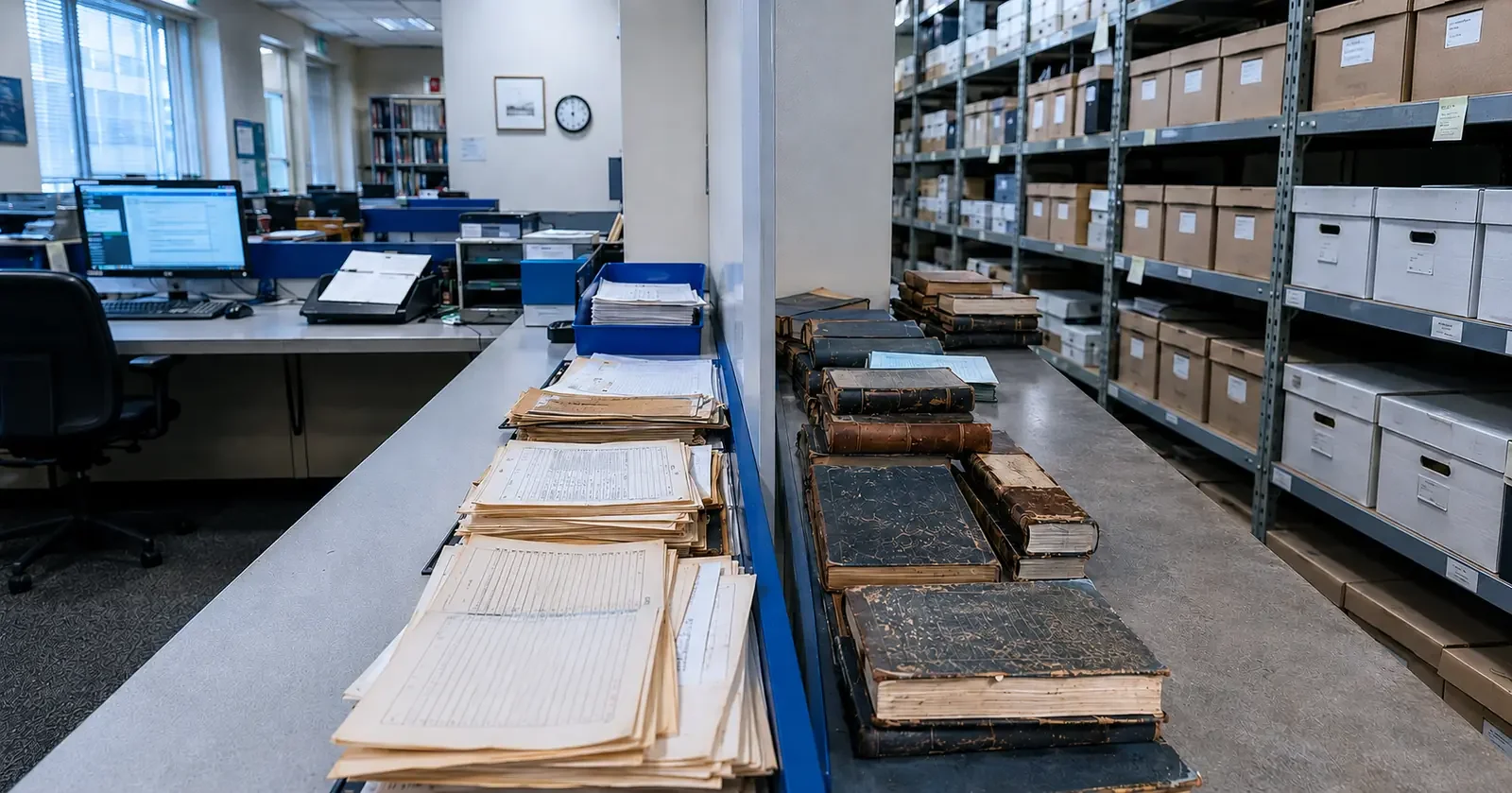
Government agencies are under growing pressure to modernize how they store and provide access to public records. Paper-based systems slow retrieval, complicate audits, and put historical documents at risk. Government records digitization helps agencies eliminate these bottlenecks and meet the access expectations of staff, attorneys, title companies, and the public.

Common drivers behind modernization projects include:

  • Paper archive overload: Decades of accumulated physical files consume storage space and slow daily operations.

  • Slow retrieval: Staff spend hours locating records that digital search could surface in seconds.

  • Aging records at risk: Paper, microfilm, and bound volumes deteriorate over time. Once lost, they cannot be recovered.

  • Staffing shortages: Fewer staff managing larger volumes of records increases error rates and access delays.

  • Public records demand: Constituents, attorneys, and title companies expect fast, reliable access to property and legal records.

  • Disaster recovery gaps: Physical records stored in a single location are vulnerable to fire, flood, and environmental damage.

  • Compliance pressure: Retention requirements and audit readiness demand organized, searchable records systems.


 What Is Government Records Digitization?

Government records digitization is the process of converting physical records—paper files, microfilm, bound books, and oversized formats—into searchable, secure digital files. It covers more than scanning.

A complete government document scanning project typically involves:

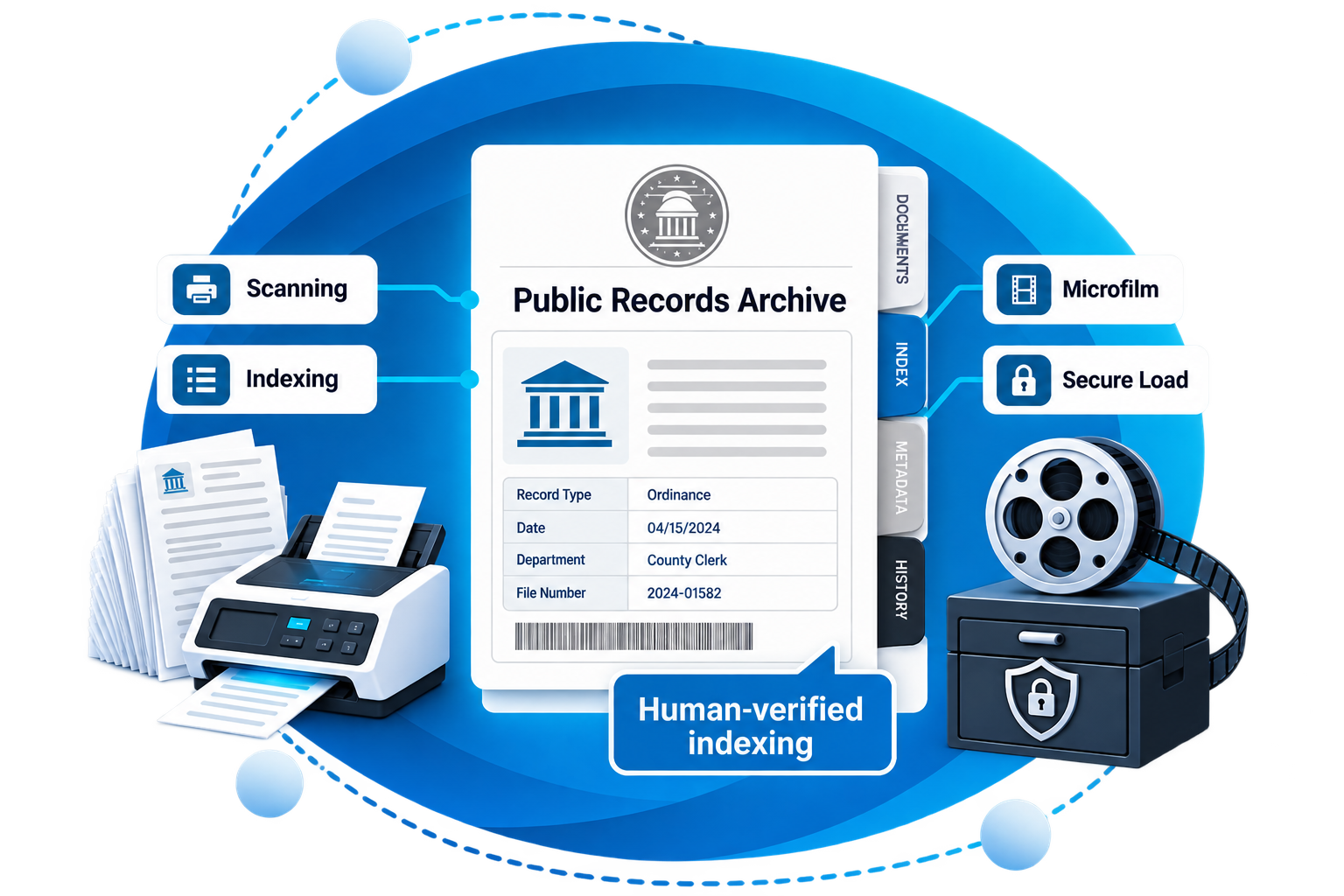
  • Scanning: High-resolution conversion of paper and microfilm into digital image files.

  • OCR (optical character recognition): Technology that reads text within scanned images and converts it into machine-readable, searchable content.

  • Indexing: Structured metadata is applied to each document so it can be retrieved by case number, date, name, document type, or any field the agency requires.

  • Preservation: Storing digital records in formats and systems designed for long-term access and integrity—protecting against file obsolescence, format changes, and unauthorized access.

  • Digital archive delivery: Organized records delivered into an agency's records management, ECM, or archive system.

When all five steps are complete, staff can retrieve a 30-year-old deed or a current incident report in seconds—without leaving their desk.


How Government Document Scanning Works

Every government document scanning project follows a structured process. Understanding the steps helps agencies plan realistically and reduces surprises during execution.

Records Assessment and Planning

RDS reviews the agency's record types, archive size, condition, indexing requirements, and system environment before any scanning begins. This assessment shapes the entire project plan, from staffing to delivery format.

Preparation and Secure Scanning

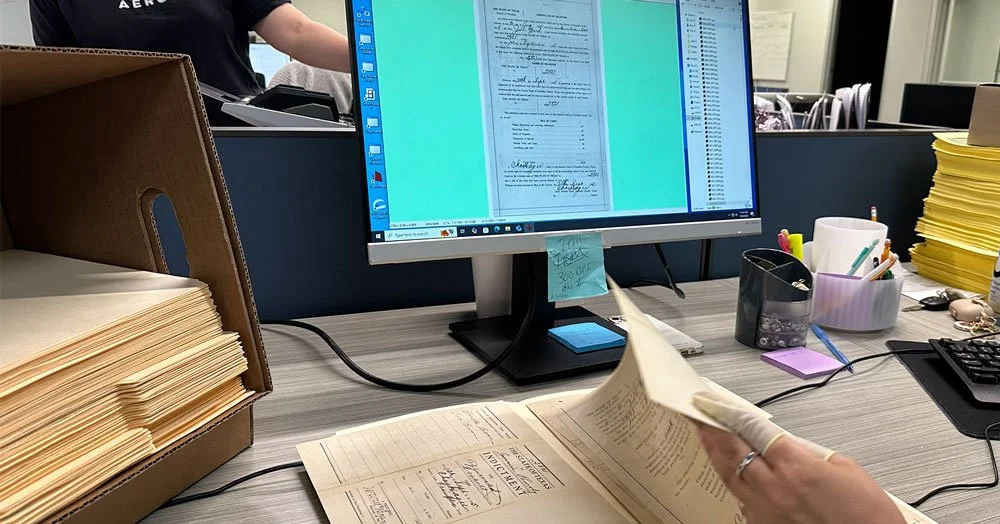
Records are prepared—removing staples, repairing damaged pages, and organizing materials for high-volume production scanning. Chain of custody is documented throughout. Scanning is performed on-site or at an RDS facility, depending on volume and sensitivity.

OCR and Indexing

Scanned files are processed through OCR to make content searchable. Structured index fields—matched to the agency's workflow requirements—are applied to each document for accurate retrieval.

Digital Delivery and Integration

Completed records are delivered in the format the agency's system requires, whether that's a county recording platform, an ECM system, or a standalone digital archive. Field mapping and import structure are confirmed before scanning begins, not after.

Systems RDS works with regularly include:

Cott Systems, Neumo, Fidlar, iCounty, Harris, Tyler, Alliance, Granicus, Catalis, Delta, i3 Verticals, Thomson Reuters, Landex, IQS, LGS, ProGResS, and NetData.


Government Records We Digitize

RDS supports a wide range of record types found across county, municipal, state, and court environments. The record types below cover the most common public records digitization projects— but this list is not exhaustive. If your record type isn't listed, contact us.

County and Municipal Records

  • Deeds and property records
  • Plats and survey maps
  • Tax records and assessments
  • Building permits and zoning documents
  • Council meeting minutes
  • Utility records
  • Voter registration records

Court and Legal Records

  • Case files
  • Probate records
  • Court dockets
  • Evidence documentation
  • Legal archives

Public Administration Records

  • HR and personnel files
  • Procurement records and contracts
  • Finance documents
  • Compliance and audit records

Archival and Historical Records

  • Bound books and ledgers
  • Microfilm and microfiche
  • Historical archives
  • Oversized maps, plats, and engineering drawings


Benefits of Government Records Digitization

Government document scanning services produce operational changes that affect every department and every interaction with the public.

Faster Records Retrieval

Staff locate records in seconds rather than hours. Public requests are fulfilled with fewer delays.

Reduced Physical Storage Costs

Digitization frees up floor space currently occupied by filing cabinets, boxes, and microfilm storage.

Stronger Disaster Recovery

Digital records backed up across secure locations are protected against fire, flooding, and physical loss.

Compliance and Audit Readiness

Organized, searchable digital files support retention schedules, internal audits, and statutory requirements.

Better Public Access

Constituents, attorneys, and title companies can be served faster through improved search and retrieval.

Historical Preservation

Fragile paper, bound volumes, and aging microfilm are preserved in a format that doesn't deteriorate.

Reduced Operational Inefficiencies

Less time spent on manual retrieval means staff can focus on higher-value work.

Searchable Digital Archives

OCR and indexing transform scanned images into records that can actually be found—not just stored.

For agencies managing land records specifically, our blog on what new recorders should digitize first outlines a practical sequencing approach.

Making the Case to Your Board

Getting digitization approved is often harder than doing the work itself. Someone has to be the first person to ask the board for six figures on a project with no prior line item—and that person is usually you, not us. RDS builds the case with you so you're not walking into the Commissioner's Court alone.

Scope and cost breakdown Record volume, format types, and a phased cost structure tied to your actual archive—not a generic estimate.
Comparable project data What similar counties spent, how long their projects took, and what changed operationally afterward.
Cost of inaction The risk and expense of continuing to store, search, and protect records manually.
A phased timeline Milestones structured around your county's budget cycle, so the ask matches how the board actually approves spending.

RDS builds this case alongside you, not from a template:

  • We prepare the cost and ROI model: Scoped to your record volume and county rules, not a boilerplate figure.
  • We supply before-and-after proof: Real examples from comparable county projects your board can point to.
  • We present to the Commissioner's Court: RDS will make the case directly to your board, so you don't have to carry the pitch by yourself.
  • We support the RFP process: From drafting requirements to responding to procurement questions, we help make sure the request moves through your process cleanly.

You know your records. We'll help you make the argument that gets them funded.

Preserving Critical Government Records

Digitization creates a copy. Preservation protects that copy—and ensures it remains accessible, authentic, and usable over time.

Government document scanning without a preservation strategy can leave agencies vulnerable to format obsolescence, system migration failures, and loss of document authenticity. RDS approaches preservation as part of every digitization engagement, not an afterthought.

Key preservation principles RDS applies to government records projects:

  • Long-term retention formats: Records are delivered in open, standards-supported formats designed to remain accessible as technology changes.

  • Chain of custody documentation: Every record is tracked from pickup through delivery, with audit trails that support legal and compliance requirements.

  • Historical integrity: Bound volumes, microfilm, and aging documents are scanned using equipment and processes that protect fragile originals.

  • Disaster recovery readiness: Digital records stored in redundant, secure environments are protected against physical threats that destroy paper archives.

  • Access continuity: Preserved records remain retrievable regardless of software or platform changes.

For agencies needing a dedicated preservation solution, RDS also offers document preservation services built around long-term archive integrity.

 See how RDS converts aging, damaged, or difficult-to-read records into clear, accessible digital files while preserving the integrity of the original document.


Who We Support

RDS works with government agencies of all sizes—from small municipal offices managing a few hundred linear feet of records to large county systems with decades of backfiles.

County Governments

Property records, land documents, tax files, and administrative archives across recorder, clerk, and assessor offices.

Municipal Governments

City and town records covering permits, utilities, council minutes, and local administration.

State Agencies

High-volume archive projects, compliance-driven retention programs, and statewide modernization initiatives.

Courts and Judicial Systems

Case files, probate records, dockets, and historical legal archives.

Public Archives and Historical Societies

Preservation-focused projects for bound volumes, newspapers, photographs, and legacy formats.

Land Records Departments

Deeds, plats, mortgages, and instrument records for county recorders and registers of deeds. Our land record indexing services address the specific requirements these offices face.

Tax Assessor Offices

Property assessment records, parcel files, and historical tax documents.

Public Works and Utilities

Engineering drawings, infrastructure records, and large-format documents.


Why Government Agencies Partner with Revolution Data Systems

Most scanning vendors treat government work as a volume transaction. We treat it as a records project, because a mis-indexed deed is not a rounding error. It’s a record that a title attorney cannot find and an elected official has to answer for.

County-Rules Indexing, Verified by People

AI can read a document. It cannot know your county's recording rules, your subdivision list, or which instrument type a 1953 deed actually is. We build indexing rules according to your county's standards and verify records by hand.

Government-Focused Expertise

We index land records for roughly 1,000 of the 3,100 counties in the United States, including about 60 of Louisiana's 63 parishes. County recorders, court administrators, and municipal clerks operate in environments that look nothing like commercial document management, and we have spent ten years inside them.

Nationwide Capabilities

RDS supports government agencies across the country with on-site scanning, secure facility processing, and centralized project management for multi-location initiatives.

Microfilm and Legacy Format Experience

Many government archives still include microfilm, microfiche, and bound volumes. RDS handles these formats routinely via our microfilm scanning service , including large-format scanning for maps, plats, and engineering drawings.

Scalable Workflows

Whether the project is a 500-box backfile or an ongoing day-forward scanning program, RDS scales to the volume and timeline the agency requires.

Secure Document Handling

Chain of custody is maintained throughout every project. Records are tracked, protected, and delivered in controlled workflows appropriate for sensitive government materials.


Nationwide Government Document Scanning Services

RDS supports government document scanning projects across the country—from single-office backfile conversions to multi-department, multi-location digitization programs.

Agencies outside major metro areas and rural county offices face the same records challenges as large municipal systems. RDS provides the same project structure, indexing standards, and delivery quality regardless of geography.

Our nationwide capabilities include:

  • On-site and facility-based scanning: RDS deploys to agency locations or processes records securely at an RDS facility, depending on volume, sensitivity, and timeline.

  • Large-scale archive projects: High-volume backfile conversions spanning decades of records are a routine project type—not an exception.

  • Centralized project management: Multi-location initiatives are coordinated through a single project team, with consistent standards applied across every site.

  • Remote project support: Agencies at any location receive the same access to planning, status updates, and delivery workflows.

Whether your agency is managing a county archive in a rural township or a statewide modernization program, RDS has the capacity to execute at the scale you need.


Start Your Government Records Digitization Strategy

If your agency is managing growing paper archives, slow retrieval, or records at physical risk, the right digitization strategy can change how your office operates every day.

RDS works with county, municipal, and state agencies to assess records, build practical digitization plans, and execute projects without disrupting daily operations. Whether you need a full backfile conversion, a day-forward scanning program, or a targeted archive preservation project, we can review your requirements and provide clear next steps.

Schedule a Records Assessment


  Frequently Asked Questions About Government Document Scanning