Why Clerks Are Digitizing Their Naturalization Records
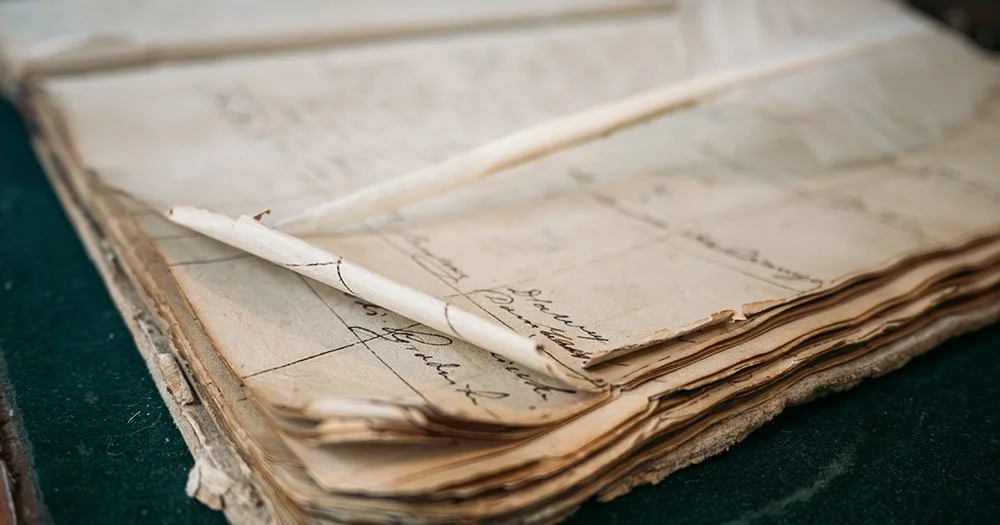
Ask a clerk which books leave the shelf most often, and naturalization records are usually on the list. Genealogists pull them to trace an ancestor's arrival. Descendants request certified copies for citizenship applications in another country. Every request means finding the right volume, opening a binding that has been opened many times before, and copying a page that may already be fading.
Clerks are digitizing their naturalization records for four reasons: they are permanent records, the older ones are open to the public and heavily requested, in some offices the volume on the shelf is the only original, and in some states grant money can help pay for the work. Digitizing them protects the books, lets staff answer requests without pulling the originals, and gives researchers a way to search by name.
Why the clerk's copy matters
Before the federal Basic Naturalization Act of 1906, any court of record could naturalize a new citizen, whether it was a county court, a city court or a state court. There was no federal duplicate. The declarations of intention, petitions, certificate stubs and indexes stayed with the court that created them, and today they sit with county clerks, court clerks and prothonotaries across the country. In New York, they are with the county clerk. In Pennsylvania, they are often with the Prothonotary. Even after 1906, the papers a county kept can hold details that are hard to find anywhere else.
Some of these collections were microfilmed decades ago. The original volume is still the court's record, though, and certified copies come from the clerk's office. When Queens and Bronx counties in New York put their naturalization records online, certified copies still came from the County Clerk. For some offices, the volume on the shelf is the only original that exists.
What all that handling does to the books
Every time a volume comes off the shelf, the binding flexes, the acidic paper gets a little more brittle and the ink fades a little further. Naturalization books are some of the hardest-working books in a records room, and it shows.
Then there are the risks nobody plans for: a burst pipe, a fire, mold in a basement storage room. And there is theft. Old naturalization papers sell as collectibles, and clerks have told us about records walking out the door. A digital copy kept somewhere else means the record survives, whatever happens to the original.
Protecting these records is really three different jobs. An office may need one, two or all three:
- Physical preservation is work on the book itself. In our Dallas preservation lab, that can mean repairing pages, deacidification, encapsulation and a new custom binder built for continued use.
- Scanning captures an image of every page, so staff and researchers can use the record without handling the original.
- Image enhancement is digital work on the scanned image. Faded ink and darkened pages become easier to read on screen. Nothing happens to the original. If your naturalization records are already on microfilm, those rolls can be converted to digital images as well. We convert 35mm microfilm in-house.
Who is asking for these records?
Two groups keep these books moving. Genealogists are steady, year-round researchers. The second group needs something more formal: descendants applying for citizenship in another country often have to show when an ancestor naturalized, and they need a certified copy to do it. Those requests tend to be urgent, and each one takes staff time.
It adds up. Queens and Bronx counties have reported receiving hundreds of in-house requests for naturalization records every year, with staff hours spent retrieving and copying each one. In Berks County, Pennsylvania, the Prothonotary's office has described its naturalization records as its most frequently requested and researched records, especially by genealogists.
Before Broome County, New York, scanned its naturalization records, a request for anything older than the past few years meant staff going to the county's records storage building, finding the record, then scanning and emailing it if they could, or bringing the original back. Once the records are digital, staff can answer that request from their desk, and the original stays where it is.
What it takes to make these records searchable
Many naturalization collections have only a handwritten index, and some have none. A scanned book without an index is still a book: staff page through images instead of pages.
An index changes that. It captures the fields your office and its researchers actually search by. Queens and Bronx counties, for example, built their online archive so users can search by petition number, year of arrival, country of origin, county and name. Your office may search differently, and the index should follow the way your office works.
In practice, a searchable index means staff answer requests in minutes, fewer researchers need to come in and page through the books, and the office keeps collecting copy fees on requests it can now fill easily. Each office also decides what goes online. The older records are open to the public; more recent ones may fall under different access rules.
Here is how we check the work. Every image we capture is reviewed by a person. Every index entry is keyed by two people working independently, and a reviewer resolves every mismatch against the image. That is what we mean by 100% double-blind verified. Anything that can't be read with certainty goes on an exceptions report at the end of the project, with the reason, so your office knows where every record stands.
What other offices have done
There is no single way to do this. A few examples from public reports:
- Queens and Bronx counties, New York, launched a shared online archive in 2023 with more than 250,000 naturalization records dating from 1795 to 1952, free for anyone to search.
- Broome County, New York, scanned its naturalization records along with older civil actions, a project that freed up 330 boxes of storage at its records center.
- Berks County, Pennsylvania, took it in phases. By the end of 2019, the Prothonotary's office had digitized every naturalization record through June 1930, more than 21,000 pages that year alone, and kept working forward from there. Each office decided what to protect first and how far to take it. That is a good way to think about your own collection.
How it works in New York
In New York, naturalization records are permanent records under the state's retention schedule for local governments, known as LGS-1. Keeping them in usable condition is part of the clerk's responsibility, with no end date.
New York also has a way to help pay for it. The Local Government Records Management Improvement Fund (LGRMIF), run by the New York State Archives, is built from fees county clerks already collect on certain recordings and court index numbers. Its grants cover converting records through imaging and microfilm. A few things to know:
- Applying takes a resolution from your governing body.
- Recent grant cycles have opened in February, with applications due in early spring. As of November 2026, the most recent cycle (2026-27) opened February 17, 2026, and closed April 1, 2026.
- That makes winter the time to decide what to include, line up the resolution and put numbers to the project. We can help you scope it, so the case you bring to your board is clear.
How do offices pay for it elsewhere?
Outside New York, funding depends on your state and your office. Some sources offices relied on in recent years, like pandemic-era federal funds, have largely run their course.
What works everywhere is breaking the project into pieces your budget can carry. Berks County worked forward through its collection by date. Other offices start with the most fragile volumes, or the years researchers ask for most. When we write a proposal, we give you options: the complete project, the project phased by era, or a fixed monthly budget you set, billed up to a limit you choose. That way the work fits this year's budget and your term in office.
What drives the cost? Mostly the collection itself: how many volumes and pages there are, what condition they're in, whether you're starting from paper or microfilm, and how many fields the index needs to capture. Knowing those four things is the first step toward a number you can take to your board.
Where should an office start?
Every office is at a different place. Some have a handful of fragile volumes that need repair before anything else. Some already have their naturalization records on microfilm. Some have images from an earlier project and no index to go with them. We figure out where you are and start there.
Since Revolution Data Systems was founded in 2015, we have worked with 790 government entities in 38 states and captured more than 100 million images. Our Dallas preservation lab handles the physical work on original books, and every part of the job is done by our own trained employees, never temporary labor. If purchasing is a question, we are SBA 8(a) certified, a FEMA Record Preservation Contractor and a COSTARS approved vendor, and we hold Choice Partners and TIPS cooperative contracts that any U.S. local government can join at no cost.
You don't need a finished scope to start the conversation. Tell us what's on your shelves, what condition it's in and what you'd like to be able to do with it. Contact us, and the person who works with offices in your area will be in touch.