
The Preservation Method That's Destroying Historical Records: Why Laminated Records Are Now Failing
If your office holds historical records, there's a good chance some of them were laminated. Lamination was a widely accepted preservation practice for decades—applied to documents across the full span of the records vault as a way to protect paper from handling damage and environmental wear. Many county clerks, court offices, and municipal archives followed that guidance in good faith. It wasn't until the 1970s that archivists and conservators recognized lamination was causing long-term damage to the very records it was meant to protect—and discontinued the practice. Many of those collections are still on shelves today, carrying risks that weren't visible at the time.
The problem is that historical record delamination is now a present-day reality for many of those offices. The plastic film applied decades ago is breaking down—and as it does, it's actively damaging the paper it was meant to protect. This article explains why lamination fails over time, what the warning signs look like, and what recovery options are available for collections already showing deterioration.
Why Did Government Offices Laminate Records in the First Place?
County offices and municipal archives laminated records because they were told to. Cellulose acetate lamination—a process that encases paper documents in a thin plastic film—was widely recommended from the 1930s through the mid-20th century. Major institutions, including the National Archives, used and endorsed it.
County clerks, court offices, and records managers who applied lamination to deeds, court filings, and historical ledgers were following established professional guidance. They weren't cutting corners. The preservation field genuinely believed the method offered long-term protection, and for a period, that belief was well-founded, given what was known at the time.
The scientific understanding of cellulose acetate's long-term behavior only began to shift in the 1970s—well after the practice had become widespread. By then, laminated collections were already filling shelves across the country. The problem wasn't poor judgment. It was that the material behaved differently over decades than anyone had anticipated.
What Happens to Laminated Documents Over Time?
Laminated records deterioration begins at the chemical level, long before any visible damage appears. As cellulose acetate film breaks down, it releases acetic acid—a process sometimes called "vinegar syndrome" because of the sharp, sour odor the off-gassing produces.
That acid doesn't stay contained within the film. It migrates into the paper beneath, accelerating the very deterioration the lamination was designed to prevent. The result is laminated paper yellowing, increased brittleness, cracking, and, in advanced cases, partial or total content loss.
Temperature and humidity fluctuations worsen the process. As the film expands and contracts with environmental changes, it stresses the bond between the plastic and the paper, causing bubbling, peeling, and separation. Why laminated documents fail isn't a mystery—it's a predictable consequence of a chemically unstable material aging under normal storage conditions.
What makes this particularly serious is the timeline. By the time yellowing or cracking becomes visible, the underlying lamination damage archives have already been accumulating for years. The visible signs are late indicators, not early warnings. Cellulose acetate isn't the only legacy material that behaves this way—photostats from the same era present their own set of chemical instability challenges for collections managers.
What Are the Warning Signs of Lamination Failure?
These are the physical signs that indicate laminated records deterioration is actively underway. Use this list during a collection walkthrough—it's designed to be practical, not alarming.
Yellowing or browning around the edges: Early discoloration, particularly at the margins, signals acid migration from the film into the paper
Cracking or peeling laminate film: The bond between film and paper is failing; once cracking begins, the process accelerates
Brittle paper texture when handled: Paper that snaps or tears more easily than expected has been weakened by acidic deterioration
Bubbling beneath the laminate surface: Trapped gases or moisture are separating the film from the paper
A vinegar-like odor: The smell of acetic acid off-gassing is one of the clearest indicators of active cellulose acetate breakdown
A single warning sign warrants a closer look. Multiple signs together indicate the record needs a professional assessment before further handling or storage causes additional damage.
Can Laminated Historical Records Be Restored?
Yes—many records can be stabilized or restored through professional document delamination and archival preservation services, though outcomes depend on how far the deterioration has progressed.
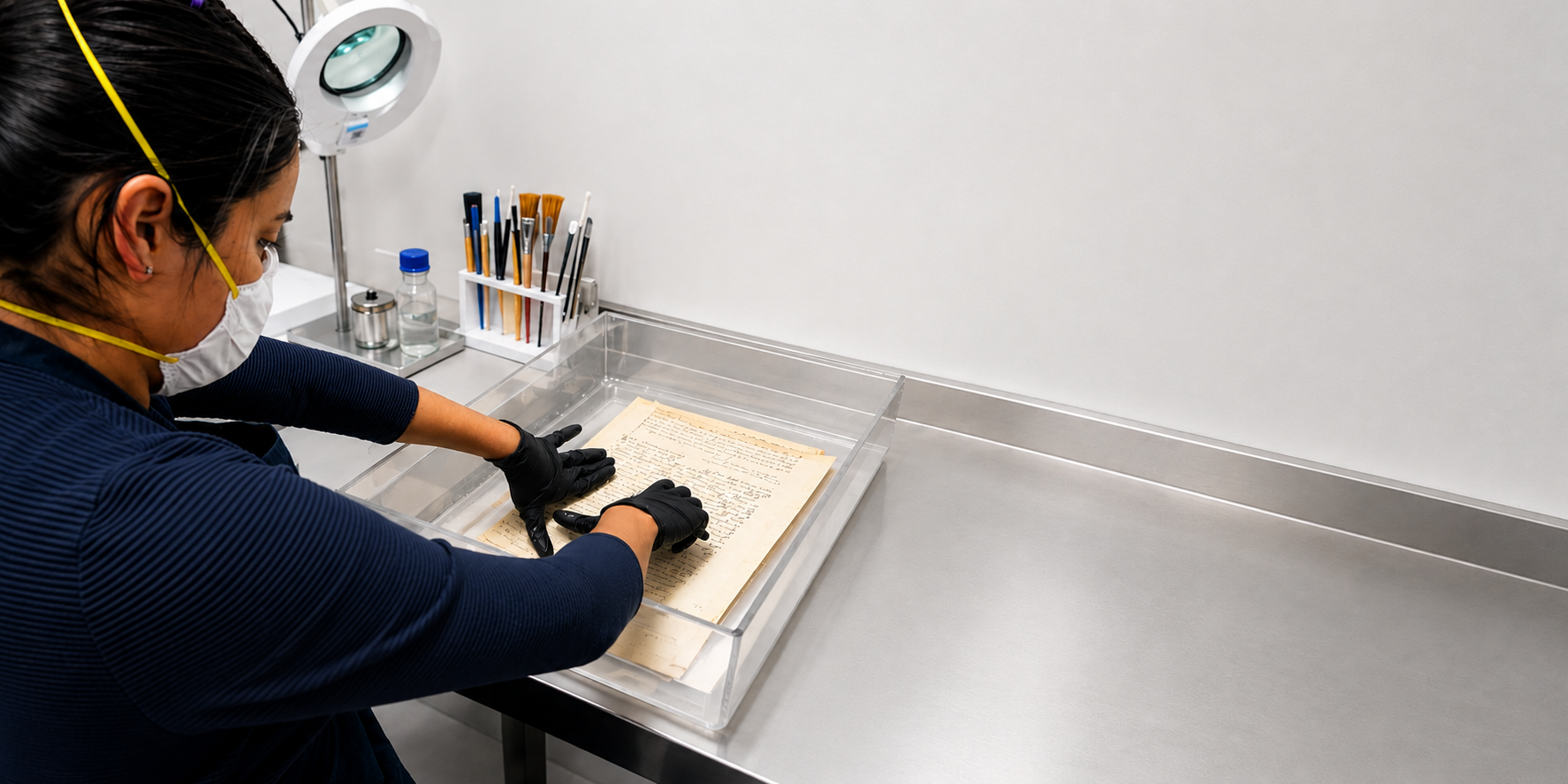
Document delamination is the careful, controlled removal of laminate film from a document by a trained conservator, using methods appropriate to the specific material and its current condition. It is not a DIY process. Attempting removal without proper training and equipment risks destroying the record entirely.
The full process typically involves a condition assessment, controlled film removal, and document stabilization—conservation treatments that reduce acidity and support weakened paper fibers, making fragile records safer to handle and store. For records that have already suffered significant content loss or where physical delamination is no longer safe, archival scanning services offer a path to preserving the content digitally before further deterioration occurs. In some cases, document enhancement can also improve the legibility of damaged materials during the digitization process.
The window matters. Records in early-stage deterioration have more recovery options than those in advanced stages. Restoring brittle documents becomes significantly more difficult—and sometimes impossible—once the paper fibers themselves have broken down. Early assessment preserves options.
How Can County Offices Preserve Aging Records Safely?
Government records preservation for laminated materials starts with a simple first step: knowing what you have. You can't prioritize treatment for records you haven't identified.
Follow this sequence to move from assessment to action:
Identify laminated records: Focus on collections from the 1950s through the 1990s; this is the period most likely to contain cellulose acetate lamination
Assess current condition: Use the warning signs above during a walkthrough; document what you observe in writing
Prioritize by risk and value: High-use records, legally significant materials, and documents showing rapid deterioration should move to the front of the queue
Consult archival preservation experts: A professional evaluation determines whether the right path is delamination, digitization, stabilization, or some combination
Document condition before and after any treatment: A before-and-after record supports accountability and informs future preservation decisions
County clerk records preservation often covers irreplaceable materials—deeds, historical ledgers, and court filings that exist nowhere else. Early assessment protects the most options. Once deterioration reaches an advanced stage, some of those options close permanently.
Digitization isn't just an emergency measure. For collections that have already been stabilized or delaminated, document indexing and long-term digital access are the logical next step—ensuring that preserving historical records translates into records staff and the public can actually use. A strong quality control process during digitization is also essential for collections with fragile or damaged materials.
For a broader framework on retention and preservation strategy, the RDS guide to preservation of records offers useful grounding across both physical and digital methods.
Take Stock Before the Window Closes
The records in your office were laminated with good intentions, following the prevailing guidance. The deterioration happening now is not the result of poor decisions—it's a material reality that the preservation field only fully understands in hindsight.
What matters now is what comes next. A professional assessment is the right starting point: it identifies which records are at risk, how far the deterioration has progressed, and what treatment path makes the most sense for each collection. RDS can evaluate at-risk materials and help determine the safest approach—whether that's delamination, stabilization, digitization, or a combination.
The preservation of public records is a long-term responsibility. Starting with a clear picture of what you have is how that responsibility gets met.
Contact RDS for a no-cost sample review and preservation assessment.
Frequently Asked Questions
Is lamination still recommended for historical records?
Lamination is no longer recommended for historical or archival records. The archival preservation field moved away from cellulose acetate lamination beginning in the 1970s, after research revealed that the film degrades over time, releasing acids that damage the paper it was meant to protect. Modern preservation relies on stable, non-damaging materials and controlled storage environments instead.
Can old laminated records be saved?
Many old laminated records can be stabilized or restored through professional document delamination and archival preservation services, but outcomes depend on how far the deterioration has progressed. Records showing early warning signs—yellowing, mild brittleness—generally have more recovery options than those with advanced cracking or content loss. A professional condition assessment is the right first step.
Why do laminated documents turn yellow?
Laminated documents turn yellow because the cellulose acetate film releases acetic acid as it breaks down. That acid migrates into the paper beneath the film, triggering acidic deterioration—a chemical breakdown that weakens paper fibers and causes discoloration. Laminated paper yellowing is typically the first visible sign of this process, though the underlying damage begins well before the yellowing appears.
What is document delamination?
Document delamination is the controlled removal of laminate film from a document by a trained conservator, using methods suited to the material's specific condition. The process typically includes a condition assessment, careful film removal, and document stabilization treatments that reduce acidity and support weakened paper fibers. It is a conservation procedure—not something that can be safely attempted without professional training and equipment.
How can you tell if a laminated document is deteriorating?
Yellowing or browning around the edges, cracking or peeling film, brittle paper texture, bubbling beneath the laminate surface, and a vinegar-like odor are all signs that removing lamination from documents may be needed. A single sign warrants closer inspection. Multiple signs together indicate the record needs professional assessment before further handling or storage causes additional damage