What Records Should Government Agencies Digitize First? Building a Government Records Digitization Strategy
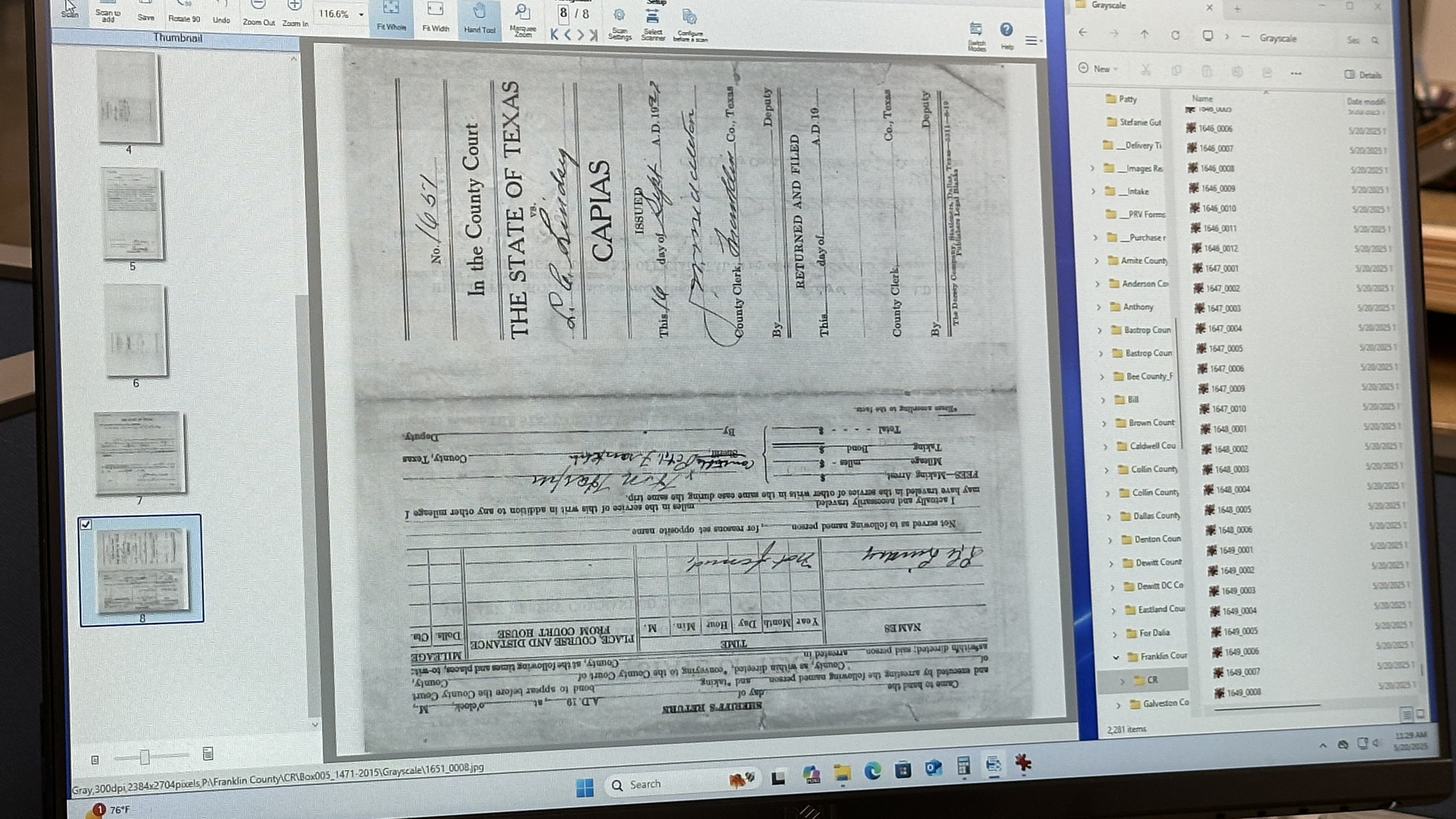
Most government agencies aren't stalling on records modernization because they don't see its value. They're stalling because the volume of records makes starting feel impossible. Rooms full of deed books. Decades of court filings. Tax records going back generations. When everything feels urgent, nothing gets done.
The fix isn't finding more budget or hiring more staff. It's prioritization. A government records digitization strategy is a decision-making framework, not a technology purchase, that tells you which records to tackle first, which can wait, and how to build a phased plan your office can actually execute. By the end of this article, you'll have a clear way to rank your records and a structure for moving forward.
Key Takeaways
Prioritize records using four criteria: public access demand, retrieval frequency, preservation risk, and compliance obligations.
Land records and court records typically rank highest overall because they combine strong public demand, frequent retrieval, and significant legal weight.
Tax records and permits follow closely due to high retrieval frequency and strong public access demand.
Historical archives carry a very high preservation risk but typically fall in a later phase unless active deterioration or grant funding moves them up.
Phasing is not a workaround for limited resources. It is how successful government records digitization projects are designed.
What Is a Government Records Digitization Strategy?
A government records digitization strategy is a plan for identifying, prioritizing, and digitizing records based on operational value, public access needs, preservation concerns, compliance requirements, and available resources. Rather than digitizing everything at once, agencies can focus on the records that deliver the greatest immediate impact.
The strategy has three core components: a records inventory assessment (a review of your agency's records to determine volume, condition, access frequency, retention requirements, and records modernization priorities), a set of prioritization criteria, and a phased execution timeline. Together, these give your office a structured path forward instead of an open-ended project.
What a government records digitization strategy is not: a technology roadmap or a one-time digitization project. It's an ongoing management framework that guides decisions across multiple budget cycles and personnel changes.
This matters especially for agencies with limited staff. When you can't digitize everything at once, you need a principled way to decide what moves first. The strategy is that decision-making tool, and it's as useful for a two-person clerk's office as it is for a large county government.
What Records Should Government Agencies Digitize First?
Government agencies should prioritize records based on four criteria: how often they're accessed, how urgently the public needs them, how vulnerable they are to physical deterioration, and whether they carry compliance or legal obligations. Records that score high across all four criteria should be given priority in any public records digitization plan.
The table below maps common record types against those criteria:
|
Record Type |
Public Access Demand |
Retrieval Frequency |
Preservation Risk |
Compliance / Legal Weight |
Recommended Priority |
|
Land Records |
High |
High |
Medium |
High |
Very High |
|
Court Records |
High |
High |
Medium |
High |
Very High |
|
Tax Records |
High |
High |
Low |
High |
High |
|
Permits & Licenses |
Medium |
High |
Low |
Medium |
High |
|
HR Files |
Low |
Medium |
Low |
Medium |
Medium |
|
Historical Archives |
Medium |
Low |
Very High |
Low |
Lower (High if at-risk or grant-funded) |
The four criteria driving these rankings each carry real operational weight:
Public access demand reflects how often your office fields requests from the public, attorneys, title companies, and researchers. High-demand records create service bottlenecks when they're only available in paper form. Every request costs clerk time and delays the requestor. In RDS's experience working with county recorder and clerk offices nationwide, land and court records consistently generate the highest volume of inbound public requests, often accounting for a significant share of counter and phone inquiries on any given day. RDS has also seen agencies use ARPA funding to scan records without fully modernizing the workflows needed to manage increased digital access demand. Many agencies that used those funds to scan records are now fielding more digital access requests than their paper-era workflows were built to handle.
Retrieval frequency captures how often your own team pulls a record type for internal workflows. Records retrieved daily have an immediate ROI from digitization: fewer trips to storage, faster lookups, and less risk of misfiling or damage. RDS has completed high-volume projects involving more than 10 million documents for a single Louisiana government office and 1,200 boxes for the Jefferson Parish School Board in 45 days. That scale becomes feasible when prioritization focuses effort on the highest-traffic records first.
Preservation risk accounts for the physical condition and replaceability of the original documents. Older paper, photostats, and handwritten volumes are actively deteriorating. The Library of Congress notes that wood-pulp paper produced before the 1980s is often acidic and, without treatment or proper storage, may become brittle and unusable within roughly 50 to 100 years. For many mid-20th-century government records, that preservation window is already narrowing. Waiting on high-risk records means some may not survive long enough to be scanned.
Compliance and legal obligations matter because some records carry statutory retention and access requirements. Those requirements vary by jurisdiction, so agencies should confirm them against the official state or local retention schedule that applies to their office. If a required record cannot be produced when needed, the agency may face compliance or legal risk.
This is the foundation of government document scanning projects done right: start where impact, urgency, and risk converge.
Why Should Land Records Be a Top Digitization Priority?
Land records, including deeds, plats, surveys, easements, and property ownership documents, are among the most frequently requested records in county government records digitization. They support real estate transactions, title searches, chain-of-title verification, and property dispute resolution. Physical access delays create real friction for title companies, attorneys, and property owners.
A typical county recorder's land records collection includes deeds, mortgages, plats, grantor/grantee indexes, and survey documents. These aren't historical curiosities. They're working documents pulled every day by attorneys, abstractors, and real estate professionals who need fast, accurate access. When those records exist only in handwritten books or deteriorating photostats, every lookup becomes a research project.
Operational pressure on recorder offices
The pressure on recorder offices compounds the problem. Clerks are managing daily recording workflows, with new deeds, mortgages, and liens coming in the door, while simultaneously fielding backfile requests for documents recorded decades ago. That dual workload makes inefficient backfile access especially costly. Every hour spent pulling and re-filing old paper is an hour not spent on current recording operations.
In the county recorder offices RDS works with, it's common to find that a significant share of daily staff time goes toward locating and retrieving backfile documents rather than processing current recordings. That ratio flips quickly once backfile records are digitized and searchable.
Deterioration adds urgency
Deterioration accelerates urgency. Handwritten volumes from the mid-20th century and older photostat copies have a finite lifespan. Ink fades. Paper becomes brittle. Some records that were legible ten years ago are already showing significant degradation. Land records digitization protects your county's chain of title before ongoing decay forces a recovery effort instead of a planned one.
The digitization payoff
For county recorders, land record indexing is where county records digitization delivers the fastest, most visible operational return: better public access, faster workflows, and protected records in a single project.
Why Are Court Records and Tax Records Often Prioritized in Modernization Projects?
Court records digitization and tax records digitization share two characteristics that make them early-phase candidates for any municipal records digitization initiative: high retrieval frequency and significant public access demand. Both record types are requested regularly by attorneys, title companies, researchers, and citizens, making digital access a direct service delivery improvement.
Court Records
Court records span a wide range of document types: case files, judgments, dockets, civil filings, and supporting exhibits. Volume is high, and the variety within a single case file can be substantial. Legal professionals expect fast access. Attorneys filing continuations need prior case records. Title researchers need judgment lien searches. When those requests require someone to pull physical folders from storage, it slows down everyone: the requestor, the clerk handling it, and every other task waiting on that desk.
Physical-only court records create a service gap that's hard to quantify until you start tracking the time required for retrieval. Digitized court records let clerks answer requests in seconds, handle more inquiries per day, and eliminate the risk of misfiling or losing documents of legal significance. For a closer look at protecting inherited paper collections, see our guide on preserving at-risk records.
Tax Records
Tax office records, including assessment records, tax lien filings, and payment history, are among the most frequently requested by citizens, attorneys, and title companies during property transactions. A title company conducting a lien search may need to verify years of payment history and confirm the absence of outstanding liens. When that requires a counter visit or a phone call with someone pulling paper files, the tax office becomes a chokepoint in the real estate transaction process.
Tax records digitization pays off quickly in reduced phone volume and counter traffic. When taxpayers and legal professionals can verify records online, or when your team can answer questions in seconds without leaving their desks, it changes the character of daily operations. Fewer interruptions. Faster responses. A measurable reduction in the workload that comes from paper-dependent inquiry handling.
Should Historical Archives Be Part of Your Government Records Digitization Strategy?
Historical archives should be included in every government records digitization strategy, but not necessarily in the first phase. Older records carry very high preservation risk: physical deterioration, fragility, and irreplaceability make them a priority for long-term protection. However, lower daily retrieval demand usually means they rank behind high-traffic operational records in early phases.
When archives move up the priority queue
The default position changes in three specific circumstances. First, when records show active deterioration, visible mold, significant brittleness, or accelerating ink loss, the window for government archive digitization closes faster than any phased plan can account for. At that point, preservation jumps the priority queue regardless of retrieval frequency.
Second, when historical records digitization is funded through grants, like LGRMIF grants or other state-level preservation funding programs, agencies can run those projects in parallel without displacing operational priorities. If a grant covers the cost of scanning a collection of 19th-century deed books, there's no reason to wait. The RDS blog on LGRMIF grant funding covers how New York agencies can use that program specifically to fund preservation work.
Third, when public interest or research access is high, genealogical records, early land grant documents, or materials tied to local historical events make a stronger case for early digitization even if daily retrieval volumes are low.
Backfile scanning: the standard method for archive work
Backfile scanning is the digitization of existing paper records accumulated over many years, and it's the standard method for historical archive work. It requires careful quality control and, for fragile or oversized materials, specialized imaging equipment. Agencies that also hold microfilm or microfiche records should factor those formats into the same planning conversation. Plan it carefully, fund it strategically, and it becomes a durable investment in your agency's institutional memory.
How Do You Build a Phased Government Records Digitization Plan?
A phased government records digitization plan begins with a records inventory assessment: a full review of what exists, its condition, and how often it's used. From there, agencies map record types to prioritization criteria and build a timeline that aligns with budget cycles and staffing capacity. This is a digital archive strategy designed to deliver results without overwhelming an office.
Phase 1: Assess
Conduct a records inventory. Walk the storage areas. Categorize records by type, volume, physical condition, retention requirements, and access frequency. This doesn't need to be an exhaustive cataloging project. A structured walkthrough with consistent documentation is enough to give you a working picture. The goal is to understand what you have before deciding what to prioritize.
When RDS conducts records inventory assessments, we regularly find that agencies have significantly underestimated the volume and condition of their backfiles. Boxes labeled "deeds 1970s" often contain multiple record types across a much wider date range, and materials flagged as stable frequently show active deterioration on closer inspection. That gap between assumed and actual condition is exactly why the assessment comes first.
Phase 2: Prioritize
Apply the four criteria, public access demand, retrieval frequency, preservation risk, and compliance obligations, to each record type you've identified. Rank them. Then build a phased scope: what gets digitized in year one, what follows in year two, and what can wait. Match the scope to your actual budget and staffing capacity, not an ideal scenario.
Phase 3: Execute in stages
Start with the highest-priority records. Before you scale, establish quality control standards: minimum image resolution, indexing accuracy requirements, file format specifications, and naming conventions. A document scanning partner with government experience can help define those standards before a single box is opened and enforce them throughout the project. If long-term secure storage is part of your plan, digital preservation software can provide a compliant, format-agnostic vault for the records you digitize.
Phasing isn't a workaround for limited resources. It's how successful government modernization planning initiatives are designed. Offices that try to digitize everything at once rarely finish. Those that start with a clear, prioritized scope and execute in stages consistently do.
Revolution Data Systems (RDS) works with county recorders, municipal governments, court offices, and archives on exactly this kind of planning. The work we do before scanning starts, assessing your records, understanding your workflows, and defining your priorities, is frequently the part that determines whether an initiative succeeds. If your office is ready to move from 'we should modernize' to 'here's how we start,' contact us today.
Frequently Asked Questions
What is a government records digitization strategy?
A government records digitization strategy is a structured plan that determines which records should be digitized, when, and in what order based on operational value, public access needs, preservation risk, compliance requirements, and available resources. It includes a records inventory assessment, prioritization criteria, and a phased timeline, giving agencies a practical framework rather than a technology checklist.
How do government agencies decide which records to digitize first?
Government agencies decide which records to digitize first by evaluating four criteria: retrieval frequency, public access demand, preservation risk, and compliance obligations. Records that score high on multiple criteria move to the front of the plan. Land records and court records typically rank highest because they combine high access demand with significant daily retrieval pressure from the public and legal professionals.
Why are land records often prioritized for digitization?
Land records are prioritized because they are among the most frequently requested record types in county government and support time-sensitive processes like real estate transactions, title searches, and chain-of-title verification. Physical-only access slows down attorneys, title companies, and property owners. Deteriorating deed books and photostats add preservation urgency on top of that operational pressure.
Should historical records be digitized before active records?
Historical records should generally not be digitized before active operational records unless they show active deterioration, are covered by grant funding, or face unusually high public access demand. Preservation risk is very high for older archives, but low daily retrieval frequency typically puts them behind land records, court records, and tax records in a standard prioritization framework.
What records provide the fastest return on investment when digitized?
Land records, court records, and tax records typically deliver the fastest return on investment when digitized because they combine high retrieval frequency with high public access demand. Digitizing these records reduces time spent on retrieval, decreases counter and phone traffic, and improves service for attorneys, title companies, researchers, and citizens who regularly request these records.
How can agencies prioritize records when budgets are limited?
When budgets are limited, agencies should use a prioritization framework that ranks records by public access demand, retrieval frequency, preservation risk, and compliance obligations, then start with the record types that score highest across all four. A phased approach lets agencies make meaningful progress with available resources rather than waiting for a budget that funds the entire project at once.
What is a records inventory assessment?
A records inventory assessment is a review of an agency's records to determine volume, condition, access frequency, retention requirements, and modernization priorities. It's the essential first step in any government records digitization strategy. Without it, agencies are making prioritization decisions without a complete picture of what they have and its condition.
Can government agencies digitize records in phases?
Phased digitization is the standard approach for government agencies and is how most successful modernization projects are designed. Agencies assess their records, prioritize by operational impact, and execute in stages that align with budget cycles and staffing capacity. Starting with the highest-priority records and establishing quality control standards before scaling leads to better outcomes than attempting to digitize everything at once.