Government Records Digitization: The Cost of Waiting
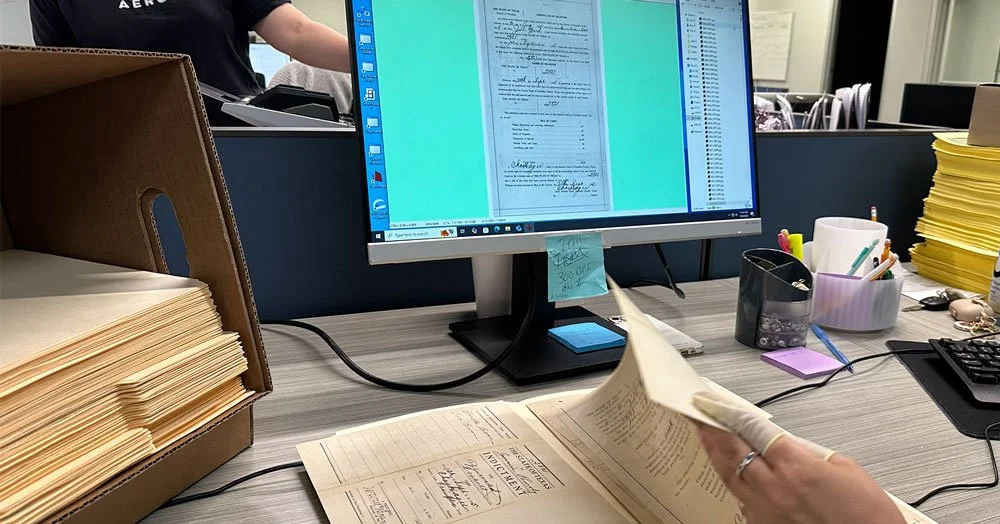
A staff member spends 45 minutes pulling a single deed to fulfill one public records request. That same scenario plays out a dozen more times before lunch. Nobody tracks those hours as a line item. They just disappear into the workday.
Most county recorders, municipal clerks, and records managers already know that government records digitization (the process of converting paper records into searchable digital files that can be stored, retrieved, and accessed electronically) is worth doing. The issue isn't awareness. It's competing priorities, limited budgets, and the simple fact that paper-based operations still technically function. Revolution Data Systems has indexed land records for roughly 1,000 of the approximately 3,100 counties in the United States over the past decade, and the pattern is consistent: the offices that delay longest often pay the most, in ways that never appear on a single invoice.
Key Takeaways
Staff hours accumulate against manual retrieval that should take seconds, and that time is rarely tracked as a real cost.
Physical storage costs grow every year records stay on paper, from climate control to off-site contracts.
Public records requests back up, creating compliance exposure under state transparency laws.
Indexing accuracy determines whether digitized records actually integrate into the systems staff already use or create a second cleanup project down the road.
The offices that avoid this cost don't just scan. They get records indexed to their county's exact rules and integrated back into the software they already run.
What Are the Hidden Costs of Delaying Government Records Digitization?
The hidden costs of delaying government records digitization often include accumulated staff time lost to manual retrieval, rising physical storage costs, increased risk of record loss or deterioration, slower public records fulfillment, and the compounding liability associated with records that aren't traceable or auditable. These costs rarely appear as a single line item, which is exactly why they persist.
Most agencies that have deferred digitization aren't ignoring the problem. They're managing a backlog that grows faster than the bandwidth to address it. The real issue is that these costs accumulate silently. Unlike a broken HVAC system or a staff vacancy, the operational drag of paper-based records doesn't trigger a work order. It just slows everything down incrementally, until the cost becomes too large to ignore.
Why Do Paper-Based Records Slow Government Operations?
Paper-based records slow government operations because every retrieval requires manual labor, physical access, and institutional knowledge that isn't written down anywhere. In high-volume offices, that friction compounds across dozens of daily requests and grows more acute with every staff transition.
Here's where that friction shows up most:
Retrieval time: Every request requires staff to physically locate, pull, and refile a record. In a county recorder's office or tax assessor's office handling dozens of requests per day, those minutes add up to hours. There's no keyword search. There's no remote access. Someone has to walk to the shelf.
Staff capacity: Paper records require hands-on management that digital records don't, from filing and re-filing to walking every request back to the shelf by hand. That overhead compounds with every new record added to the backlog.
Government records storage costs: Physical storage isn't free. Climate-controlled rooms, filing systems, off-site storage contracts, and routine maintenance all carry ongoing expenses. Those costs grow as backlogs accumulate, and they compound over years, not months. A clear preservation plan helps an office see both its current exposure and its options for reducing it.
Error and misfiling risk: Paper records are permanently vulnerable to misfiling, deterioration, water damage, and outright loss. A misfiled deed book or assessment record may go undetected for years. When it's finally needed, it may not even be findable.
How Does Delayed Digitization Affect Public Records Requests?
When digitization is delayed, service failures are direct and public: citizens, title companies, attorneys, and journalists who depend on digital records access find themselves waiting for staff to complete searches that should be instant. When records aren't searchable, every request becomes a manual project, and the agency absorbs the cost while the requestor waits. Public records digitization closes that gap by turning a manual search into an instant one.
Scenario 1: County Recorder or Register of Deeds
A title company submits a request for a chain-of-title search on a residential property with deed history dating back to the 1940s. Researchers must manually search handwritten indexes across multiple bound volumes, cross-referencing grantor-grantee books that haven't been indexed electronically. The search takes two days. The real estate closing is delayed. The title company calls three more times. That gap is invisible to the buyer, but it isn't to the agency that absorbs the calls.
Scenario 2: Municipal FOIA or Public Records Request
An attorney requests historical tax assessment records for a disputed property. The records are stored off-site in uncataloged boxes from a building move four years ago. Fulfillment takes a week. The attorney files a follow-up complaint. The agency has technically complied, but the delay creates reputational and legal exposure.
Delayed or inconsistent access to public records isn't only a service quality issue. Under state public records laws, agencies may be required to respond within specified timeframes. For example, New York mandates that agencies acknowledge FOIL requests within a defined response period.
What Risks Do Agencies Face When Records Remain in Paper Archives?
When government records preservation is deferred, agencies face three compounding risks: the physical deterioration of materials that may be irreplaceable, complete loss in a disaster, and the quiet erosion of institutional knowledge as experienced staff leave.
Digital archive solutions, secure electronic systems used to store, organize, and provide long-term access to government records, directly address all three. Here's how those risks break down in practice:
Physical deterioration: Paper records degrade. Handwritten deed books, photostats, and pre-1970s materials are particularly fragile. Acids in older paper stock cause brittleness. Ink fades. Once deterioration reaches a threshold, the information may no longer be recoverable, regardless of how much effort or money is spent.
Disaster vulnerability: Flooding, fire, and mold can eliminate a paper archive entirely. A single burst pipe in a basement records room can destroy decades of land records with no recovery path. Digital records backed up in Cyclone, RDS's secure digital vault, survive events that would otherwise obliterate paper records.
Institutional knowledge loss: When the staff member who knows that "the 1987 assessments are in the blue boxes in Room 4B" retires, that knowledge is gone. Digitized, indexed records don't depend on any one person's memory. They're self-documenting and searchable by anyone with the right access. For a closer look at protecting at-risk materials and the history they hold, see preserving the records you inherited.
|
Factor |
Paper Archives |
Digital Archives |
|
Retrieval Speed |
Minutes to hours (manual) |
Seconds |
|
Storage Requirements |
Physical space, climate control, ongoing cost |
Cloud or server-based; scalable |
|
Disaster Recovery Readiness |
Vulnerable; no redundancy |
Backed up; recoverable |
|
Public Access |
Staff-mediated only |
Remote access possible |
|
Staff Dependency |
High; knowledge walks out the door |
Low; indexed and searchable |
How Can Government Records Digitization Improve Efficiency and Reduce Costs?
Government document scanning and digitization improve efficiency by replacing manual retrieval with instant search, shrinking physical storage footprints, enabling faster public records fulfillment, and creating traceable retrieval logs that support compliance. The operational gains are measurable, and they don't require a complete overhaul to realize.
Why Indexing Accuracy Matters
One factor that often gets overlooked in efficiency discussions is indexing accuracy. Automated or AI-only indexing typically achieves 70–80% accuracy. On a backfile of 100,000 records, that means roughly 20,000–30,000 misfiled or miscoded entries that will surface as errors when someone actually needs the records. Revolution Data Systems uses human-verified indexing built to each county's specific rules, so documents integrate cleanly into the county's records management system the first time. That's the difference between real county records digitization and a scan-and-hope backfile project.
Where the Efficiency Gains Show Up
Concrete improvements local governments typically see after digitizing include:
Faster records retrieval: Staff locate records in seconds rather than spending 20–45 minutes on a single pull. In offices handling high request volumes, this alone can recapture hours per day.
Reduced storage overhead: Filing rooms and off-site storage contracts represent real, recurring expenses. Digitization allows offices to repurpose physical space and reduce or eliminate storage contracts over time.
Improved public access: Citizens, attorneys, and title companies can submit and receive records requests without requiring staff to search archives by hand. This reduces inbound call volume and improves service consistency.
Scalable backfile scanning: Backfile scanning services (the digitization of paper records that have built up over time, rather than scanning records as they are created) let offices prioritize high-demand record types first. Deed books and tax records can go first. Less-requested materials follow. Momentum builds without needing to solve everything at once.
Verified indexing and integration: Scanning is the easy part. The value is records that are indexed to your county's rules and loaded correctly into your existing land-records platform, verified by people rather than left at an AI-level of accuracy. Without that step, digitized records often require a second pass to fix what automation got wrong before they're actually usable.
Digitization also supports government records compliance by creating auditable retrieval logs: traceable records of who accessed what and when. That audit trail matters under most public records laws.
Agencies that approach this as an operational improvement project, rather than a technology overhaul, consistently find that the return on investment is easier to quantify than expected. Revolution Data Systems works with county and municipal agencies to scope and execute records digitization, human-verified indexing, and system integration in phases that align with real budget and staffing constraints.
When Is the Right Time for a Government Digitization Project?
There is no perfect time to start a records modernization project, but there are common triggers that make the case more urgent and the starting point more obvious. If any of these apply to your office, the cost of waiting is likely higher than the cost of starting.
Common triggers include:
High staff turnover or upcoming retirements in records-heavy roles
Growing public records request volume that's straining current staffing
Upcoming facility moves that require inventorying or relocating paper archives (see improving access and efficiency in year one)
Aging materials showing physical deterioration
Available grant funding that offsets project costs
On that last point: New York agencies in particular have access to the Local Government Records Management Improvement Fund (LGRMIF, a state grant program that covers digitization, preservation, and records management projects. Our guide to the New York records management grant walks through eligibility and the application process. Many other states offer similar programs. Grant funding turns a deferred project into an affordable one.
The Real Cost of Waiting
The cost of delaying government records digitization is real. It just doesn't show up in one place. It's distributed across staff hours, storage invoices, request backlogs, and the quiet risk that sits in filing rooms and basements waiting for a flood, a fire, or a retirement.
Revolution Data Systems helps agencies understand what they're working with before they commit to a full project. An assessment is a low-commitment starting point: an honest look at record volumes, condition, retrieval patterns, and the biggest operational gains.
Wondering how much your paper records may be costing your agency? Contact Revolution Data Systems to assess your records environment and identify modernization opportunities that improve access, efficiency, and preservation.
Frequently Asked Questions
Why is government records digitization important?
Government records digitization is important because it protects records from permanent loss, makes them accessible to anyone with authorized access in seconds, and ensures continuity when staff retire or a disaster strikes. Accuracy matters as much as access: records indexed to a county's specific rules integrate directly into existing land records management systems, which is what separates a usable digital archive from a collection of files that still requires manual navigation. Digitized records are easier to audit and share, which supports compliance with public records laws and raises the quality of service local governments can deliver to citizens.
What are the biggest costs of keeping government records on paper?
The biggest costs of keeping government records on paper include staff hours lost to manual retrieval, ongoing expenses for physical storage and climate control, increased risk of permanent record loss through decay or disaster, and slower request turnaround for citizens and requestors. These costs are rarely tracked together as a single line item, which is why they persist unaddressed in many offices.
How does digitization improve public records access?
Digitization improves public records access by replacing hours-long searches with instant retrieval. Staff can locate records in seconds, and local governments can support remote or online requests without anyone physically walking the stacks. Faster turnaround reduces call volume, improves transparency, and lowers the risk of compliance violations that result from delayed responses under public records laws.
Can digitization reduce government storage costs?
Digitization can meaningfully reduce government storage costs. Dedicated filing rooms, climate-controlled vaults, and off-site storage contracts are recurring line items that grow as backlogs do. Once records are digitized and verified, offices can reclaim that space and cut or eliminate storage vendor fees. Over time, those savings often offset a significant portion of the project cost.
What types of government records should be digitized first?
The highest-priority records for digitization are typically those with the highest retrieval demand or the greatest risk of physical degradation. For most county recorders and registers of deeds, that means deed books, mortgage records, and property plats. Tax assessment records, land records, and any materials already showing signs of breakdown (such as pre-1970s paper or photostats) should also move early. The indexing approach matters as much as the scanning order: records indexed to the county's exact naming conventions integrate directly into the land records management system and are searchable from day one. Lower-demand records can follow in later phases. For a full prioritization framework, see what new recorders should digitize first and what can wait.
How does digitization help with disaster recovery?
Digitization protects government records from disasters by creating copies stored in secure, redundant locations independent of the physical originals. Flooding, fire, and mold can wipe out a paper archive with no recovery path. When those same records exist in a verified digital backup, the physical event becomes a loss of equipment, not a loss of information. That's why fragile, older materials are usually the right place to start.